Fashion Prelude

As a fashion enthusiast, my relationship with style goes far beyond aesthetics; it is a lens through which I see and engage with the world. It is a language that speaks of different cultures, the land, the people, and their way of living. It tells about the stories of communities whose craft, creativity, and heritage have long shaped the essence of the industry.

me and helen

One thing that has never changed is my core, my values, and I express this through my dressing. I never felt the need to follow trends.

Fashion, for me, has always been about personal expression.

I dressed with intention and confidence of knowing who I was and what I wanted to convey through my choices.

Fashion prelude (10)

Moving away from my home country marked a...

turning point in my relationship and understanding of fashion. Surrounded by a sea of neutrals, greys, blacks, whites, and the recent surge of beiges, I found myself longing for the vibrancy of colors, the stories hidden in a motif of a saree, the kurtas adorned with delicate embroidery, and the sense of meaning behind every garment and its form.

This sense of longing for cultural depth pushed me to study it formally and to understand not just what we wear but why and how it is made. During my learning journey, I came across the devastating story of the Rana Plaza collapse, where thousands of garment workers died due to unsafe working conditions. The news changed my whole perspective on fashion and the whole framework within it. It made me question what truly matters and how I choose to create and connect through fashion.

I began to see fashion through a different lens, which also has a dark side.

Problems with Fashion?

Too many

Overproduction, exploitation, economic disparity, cultural appropriation, and a widening gap between those who actually create and those who consume. Suddenly, fashion was no longer just personal; it was political. Many of these artisans face exploitation, working tirelessly in unsafe working conditions with little pay, while luxury brands worldwide profit enormously from their craftsmanship. They often live with very little and continue to live in poverty.

PHOTO: PRATIBHA SAXENA

Sustainability, ethical production, and the climate crisis became central to my thinking. I realized that fashion is deeply connected to communities, especially in Southeast Asian countries, with people of color. I couldn’t separate fashion from land, its people, and their livelihood because I realized that it’s all interconnected.

Today, fashion personally carries both memory and meaning. I choose to use it as a tool for fairness and a medium for storytelling about culture, tradition, and ancestral wisdom. It’s a way to honor both people and planet.

This thought stayed with me, and that’s when I decided to go to the villages myself. Not just as a visitor, but as a learner, as someone who wanted to understand and find ways — even in a small capacity- to bridge this gap between fashion’s glamour and the realities of its makers. These places and their people are culturally rich and skilled in their artistry.

So, I didn’t just want to admire their work from afar;

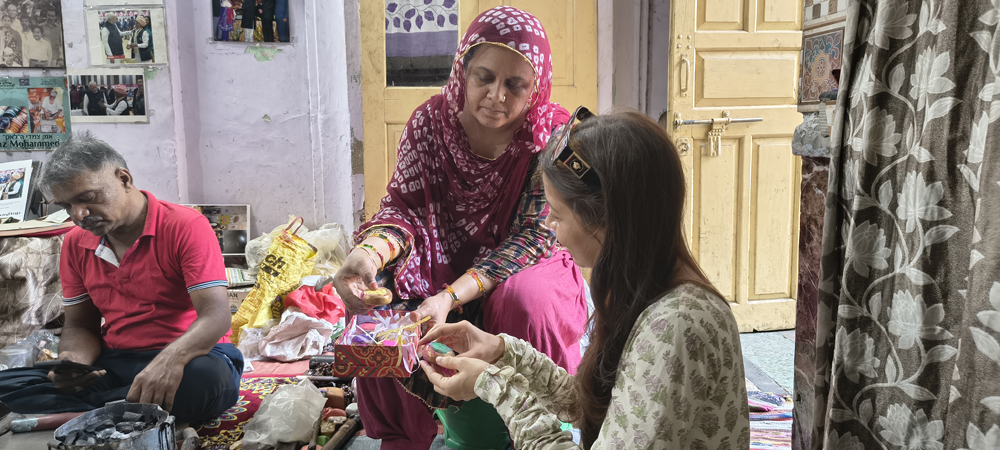
I wanted to meet them, learn about their skills, and see their everyday lives.

I wanted to see their work in motion, to listen to their stories and understand what keeps these traditions alive despite, and learn about the challenging aspects related to it. As I went closer to their lives, I began to see things with new eyes. I witnessed the process of weaving, dyeing, and embroidering- work that is painstakingly detailed, time-consuming, and yet carried out with such patience and devotion. I realized that what these artisans do is not just work — it is the preservation of art, knowledge, and sustainability, passed down through generations.

pratibha

Sustainability, which the world has recently discovered and has started practicing now, is not a new concept for them. It has always been their way of life. They consume things mindfully, with the intention of repair and reuse instead of discarding and buying new. They try to think of ways to use natural substances for dyeing, using cotton and other natural fibers for weaving, being creative with upcycling, and practicing every day what we call nowadays ‘slow living.’ And this isn’t just limited to fashion. It is present in their food habits, their festivals, their rituals, and their entire sense of being. This experience shaped my perspective of the world and how I chose to experience and express it.

And this is not just true for India, but for every geographical region in the world. Fashion is a mirror of its ecology, its people, their way of life, its social history; all of it comes together to shape how people dress and express themselves. That, to me, is the most beautiful and integral aspect of fashion that it can tell the story of a place and its people.

I want to use my voice, my education, and my creative work to bridge the gap between fashion and the values we hold dear. To remind the world that what we wear is never just clothing — it is history, labor, identity, and the possibility of justice for all stitched together.

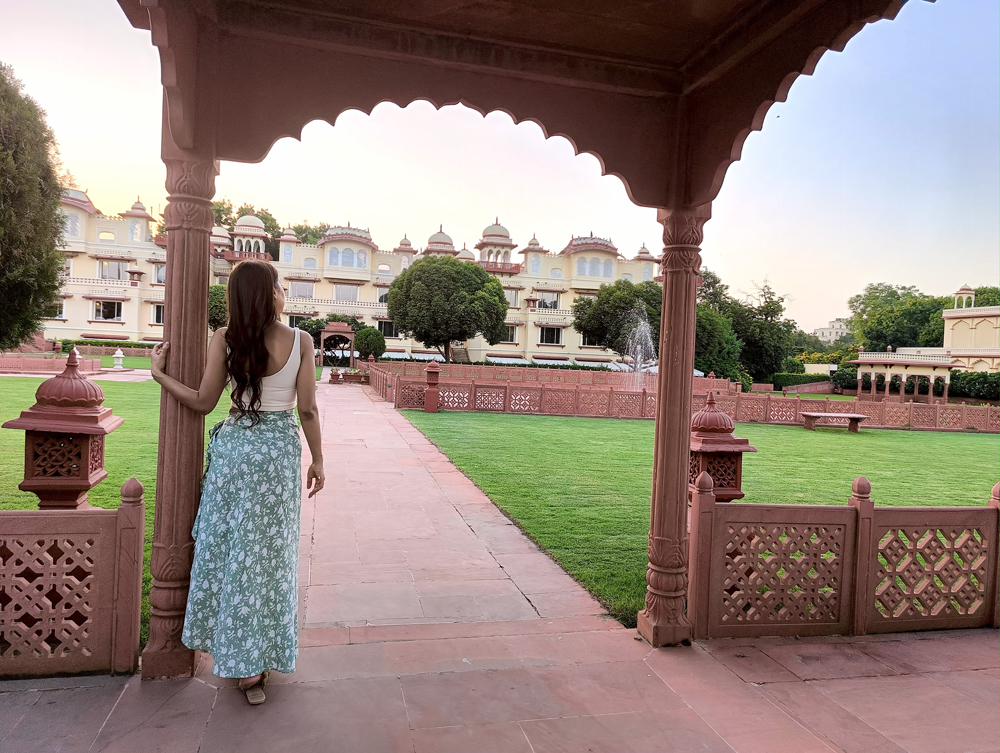
My own journey began in Jaipur, where I visited artists whose hands carry centuries of wisdom. I invite you to join me in this exploration—into the craft, the culture, and the lives of the people who are not just making textiles, but preserving a legacy.

PHOTO: PRATIBHA SAXENA