I began my journey of block printing in Jaipur. I took an auto to the bustling and dusty old lanes of Sanganer, Jaipur, where most of the block printing workshops are located. I felt a faint smell of earth, dye, and wood in the air as I travelled through the dusty old lanes of Sanganer. Eventually, I arrived at a large studio named “Jaipur Woodblock Printing” tucked away between various shops. The owner of the studio, Mr. Rishi, greeted me with warmth and pride and allowed me to explore his workshop. As I went closer to the artisans at work, my attention was immediately drawn to their hands. One look at the artisans’ hands was enough to tell the story—they had the marks of years of practice, precision, and tireless hard work and carrying centuries of wisdom. The artisans were engrossed in their work of precision, so I spent most of my time engaging with the studio owner, Mr. Rishi, learning about the craft and the process.
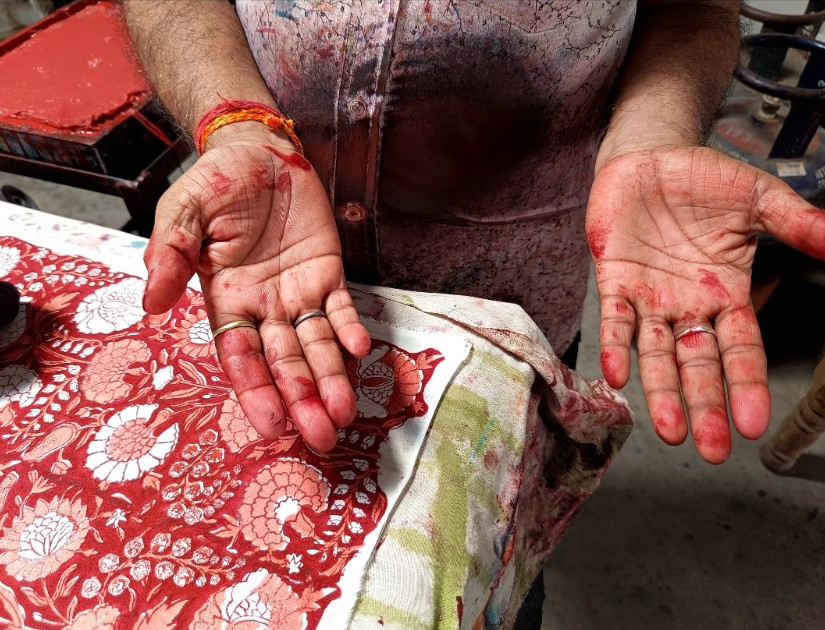
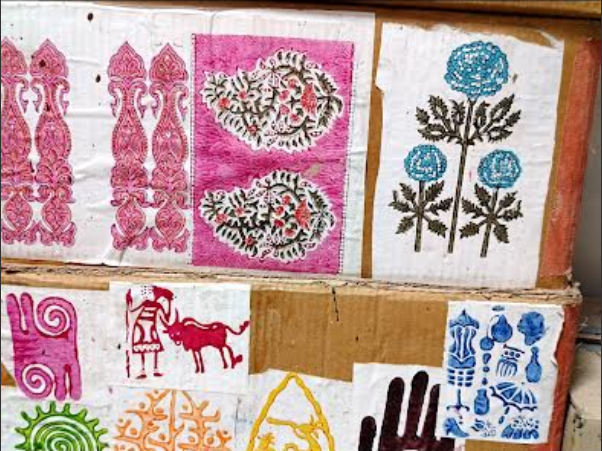
Block printing is a centuries-old art form of printing patterns on fabric using carved wooden blocks. Artisans press patterns onto cloth using intricately carved wooden blocks dipped in vibrant colors, transforming a plain fabric into one filled with narratives and stories.
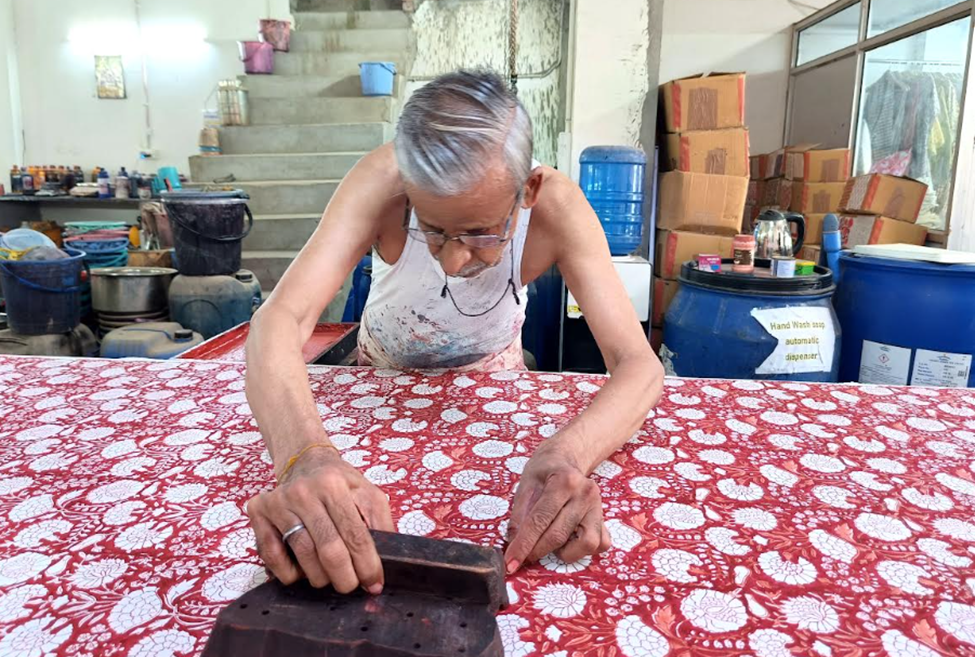
The process, however, isn’t that simple. Each stage requires a lot of precision, patience, and experience. From carving the blocks with motifs inspired by florals, wildlife, festivals, and tradition, to carefully preparing the fabric, mixing dyes to achieve the desired Pantone shade, and aligning each pattern by hand. The repetitive process of dipping the wooden block in the color tray, to aligning it on the fabric, is a skill to be mastered. The result is a canvas of stories printed and lived by the wearer
Now, let’s delve into the origins of block printing in India and learn about how it evolved to gain such popularity across the country.
Jaipur is the capital of Rajasthan and was founded by Maharaja Sawai Singh. It is popularly known as the center of art and craftsmanship, and the regality is reflected in its colorful traditions. The city’s former rulers were great admirers and consumers of the arts, inviting master artisans and craftsmen from across the country to make Jaipur their home and continue to practice their skills there. With time, these communities made Jaipur their home, flourishing it with a treasure of art and crafts. Today, Jaipur remains the prime hub of India’s diverse and beautiful handmade traditions.
The hand-carving of a wooden block is a tedious process that requires both precision and practice over many years. A freehand design is traced onto the block, which is then carved onto the block using fine pointed tools. The master artisan carves grooves about one-third of an inch deep, bringing the design onto the block.
The foundation of the entire pattern is the outline block, and it sets the foundation for every subsequent layer in the entire framework pattern. This stage is the most crucial one, so only senior artists are given the responsibility of doing it. Sheesham or teak wood is ideally used to create these blocks for its durability and ductility.
As simple as these blocks look at first glance, they are actually a work of art in themselves. These blocks transform the cloth into a scene filled with stories of culture and craft. The number of blocks per print depends on the design and the number of colors used. Each color or design element needs its own block. I particularly used three blocks to complete the pattern on my cloth.
Usually, the size of the blocks can be anything from 4 to 6 square inches, but the outline block can be as large as 10-14 square inches. The size and detail of a block often signify the style of the print itself. In traditional Indian block printing, the designs are usually composed of small, intricate motifs, reflecting the delicacy and precision of the craft.
In the art of block printing, the environment plays a significant role just as much as the artisan. There is a reason why this craft is extensively practiced in the dry sunny regions of Rajasthan. During my trip, I explored the region of Sanganer. The studio director said that even the water is soft and mineral-rich, which allows for mixing dyes for the colors to be soaked in well by the cotton fabric. However, an excess of humidity can jeopardize the whole process, resulting in a slowdown of the drying process. The same color may emerge in different shades as on the weather conditions. For instance, white fabrics in particular need the longest time for drying, and so do the intricate patterns that require multiple layers of printing, also extending the process further. Monsoons prove to be the worst. In this way, weather shapes not only the craft but also the very colors and patterns that define it. Mindfully selecting prints and colors in harmony with the weather adds yet another layer of precision and artistry to the process.
The next step is curing the blocks. These blocks are first placed in a tray of mustard oil, which prevents them from warping. Once cured, the blocks are allowed to drain on layers of fabric before being dipped into the colors for printing.
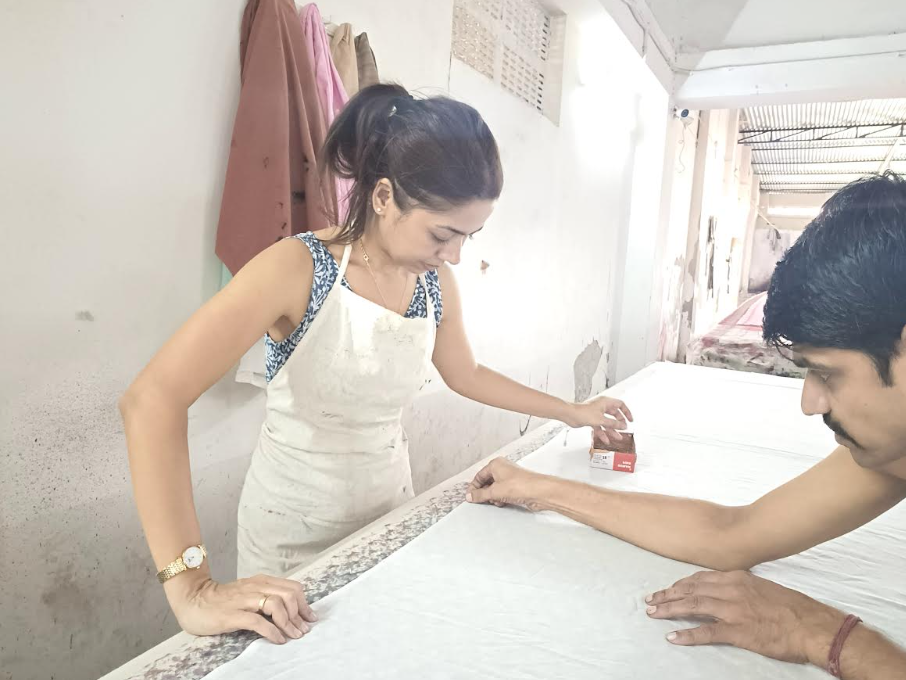
Before a fabric can be imprinted with its story, it must first be carefully prepared. It is gently washed and is dried under the intense sun, which helps the colors achieve maximum vibrancy. Once dyed, the fabric is measured, cut, and carefully laid out on thickly padded tables, ready for the intricate process of printing.
The block printing technique is a meticulous process. The process starts by printing the outline. The artisan with utmost precision places the block on the fabric and gently strikes it with the heel of the hand. Each subsequent block must be precisely aligned with the previous pattern, creating a beautifully harmonious array of designs. For left-handed artisans like I am, the movement flows from left to right across the edges to complete the border. Once the outlines are done, the interior motifs are printed. Remarkably, no rulers or guides are used; everything relies on the artisan’s hands, the color-dipped blocks, and years of honed experience and technique.

The finished fabrics are then left to dry in the sun, a crucial step in the block printing process. Once fully dried, they are carefully washed and ironed, ready to be stitched and to embark on journeys across the world.
Block printing doesn’t originally belong to India. It all started in China thousands of years ago. Yet, India has mastered this art by integrating its own unique designs and motifs. The special natural plant dyes and mordants also set this art apart from those practiced in other regions and give it a distinctly Indian character. India also has a palette and style unlike anywhere else in the world, with indigos, reds, and blacks of unmatched depth and vibrancy. The country’s favorable weather, particularly in regions like Rajasthan, further supports this craft, allowing artisans to bring their intricate patterns to life with precision and brilliance.
India’s long history of invasions and its vast cultural diversity have also contributed to enriching this craft with unique motifs and patterns, giving the country a distinct artistic identity that sets it apart from the rest of the world.
Block printing became widely prevalent in India during the Mughal era. The Mughals were popular for their extravagant lifestyle. They valued clothing and considered it an essential expression of luxury. They incorporated their own patterns and motifs inspired by Mughal gardens, intricate florals, and even their architecture. Later, when the British invaded India, they too got charmed by the beauty of Indian block prints and their colors. However, the British introduced synthetic dyes and printing machines in order to reduce the costs, which later took over the traditional way of hand block printing and ultimately led to a decline in its popularity.
Despite mechanized alternatives, the fashion enthusiasts continued to value the finesse of hand block printing. The craft saw a resurgence between the 1960s and 1970s, inspired by the free-spirited bohemian aesthetic.
Traditional block printing has enjoyed enduring popularity, both in the past and today. Without the use of modern machines or computers, it continues to grow, captivating new audiences while preserving its artisanal charm
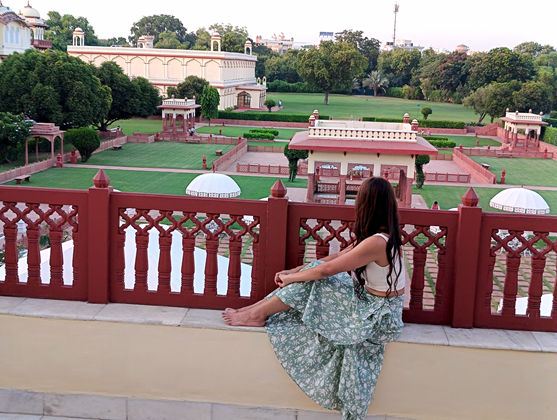
Rajasthan, often regarded as the birthplace of hand block printing, revealed its contrasts during my trip to Sanganer. At first, the town appeared colorless, with dusty roads and unfinished concrete buildings. But as I explored further and stepped into a studio, a vibrant world came alive—fabric dyers, block makers, printers, washers, tailors, and suppliers all working together to create the renowned block-printed textiles of Sanganer.
Indian block printing studios today serve a selective yet passionate global audience of niche markets and textile aficionados. With the rising fascination for slow, sustainable fashion and preference for artisanal work, this centuries-old craft continues to endure, though the situation is always maintaining its balance on a fragile edge.