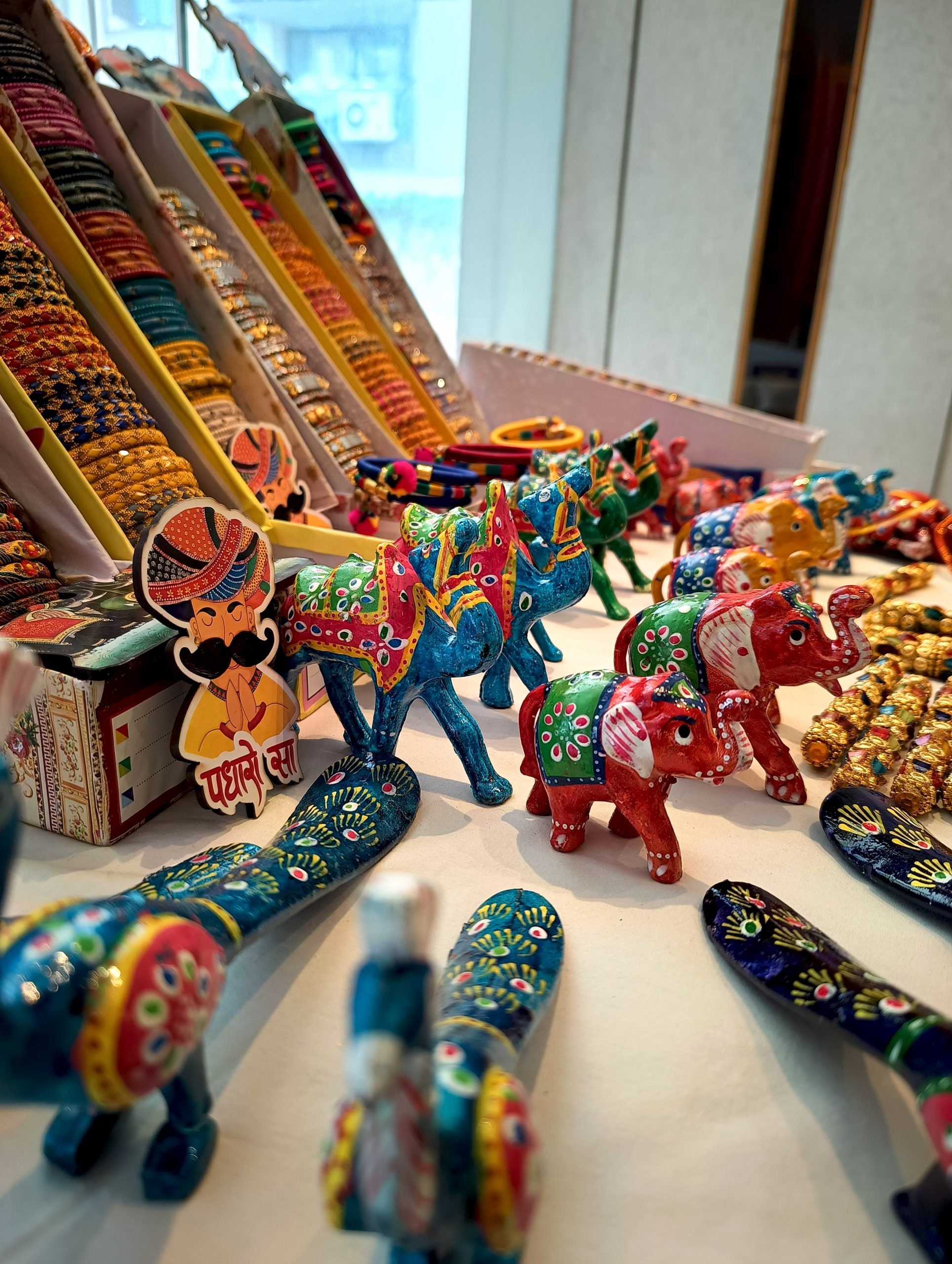
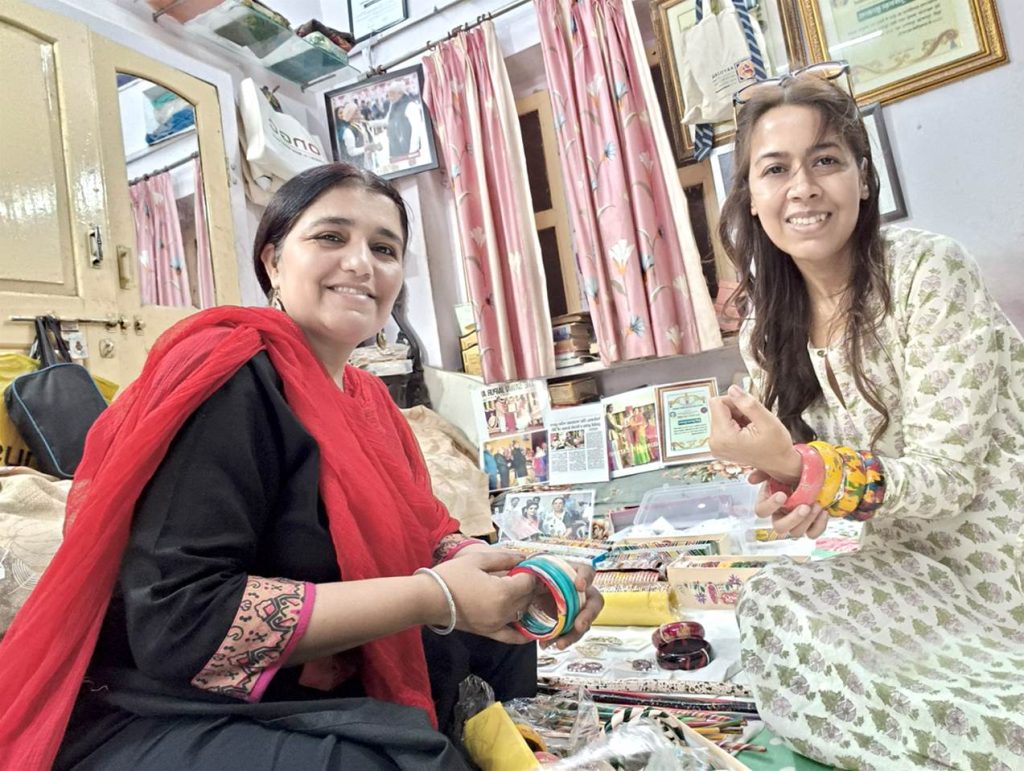
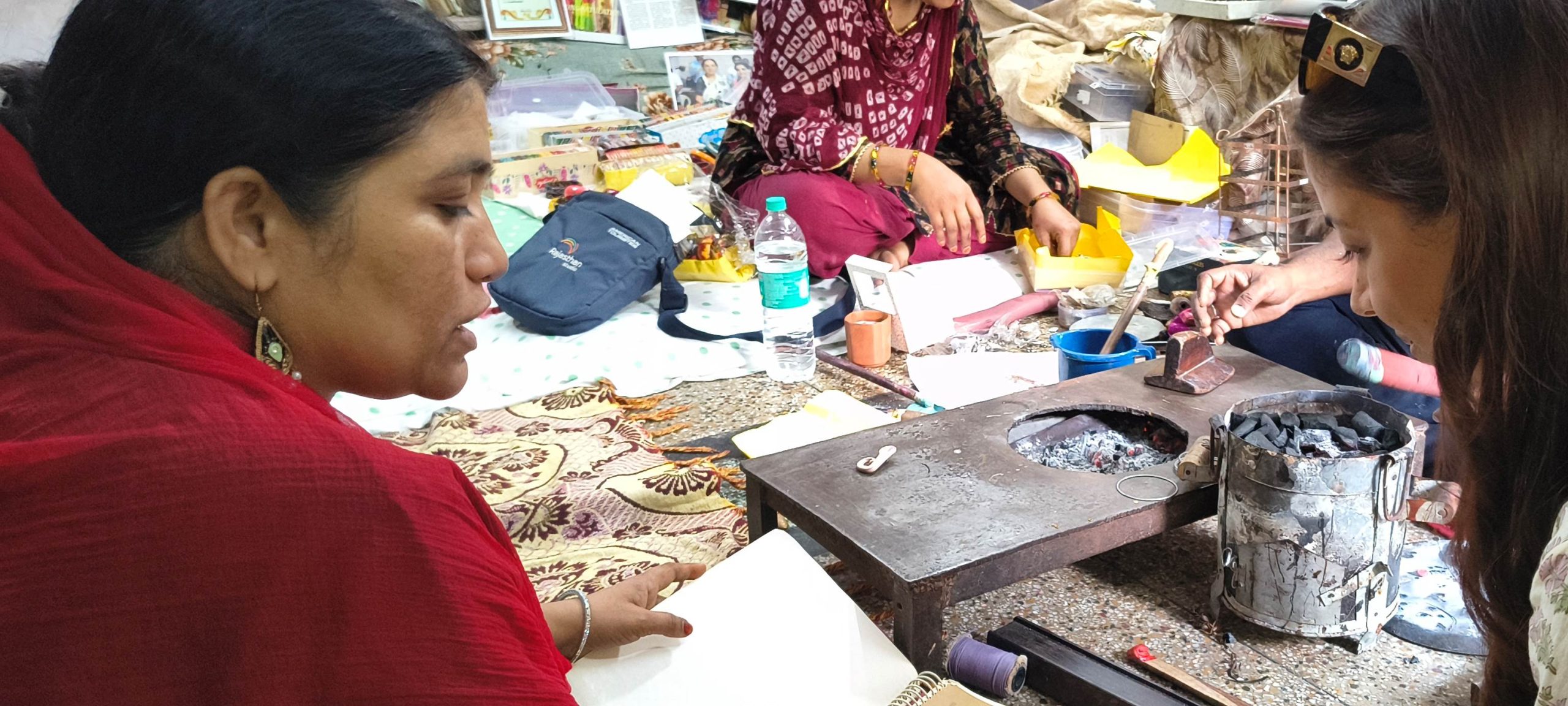
I traveled to Rajasthan to explore this traditional art form, where various communities craft ‘lac’ bangles that stand as a testament to India’s rich handicraft heritage. In the dusty inner lanes of Jaipur, I visited a humble home where six family members lived in a single room with a small kitchen. The artisans welcomed me with a warm Namaste and were able to speak to me fluently in English while proudly laying out their lac jewelry. They explained their craft to me, let me try making a bangle, and even offered me samosas and a cold drink as the heat from the melting process grew intense. They shared with me how their family has practiced this art form for generations, and how they are now carrying the tradition forward.
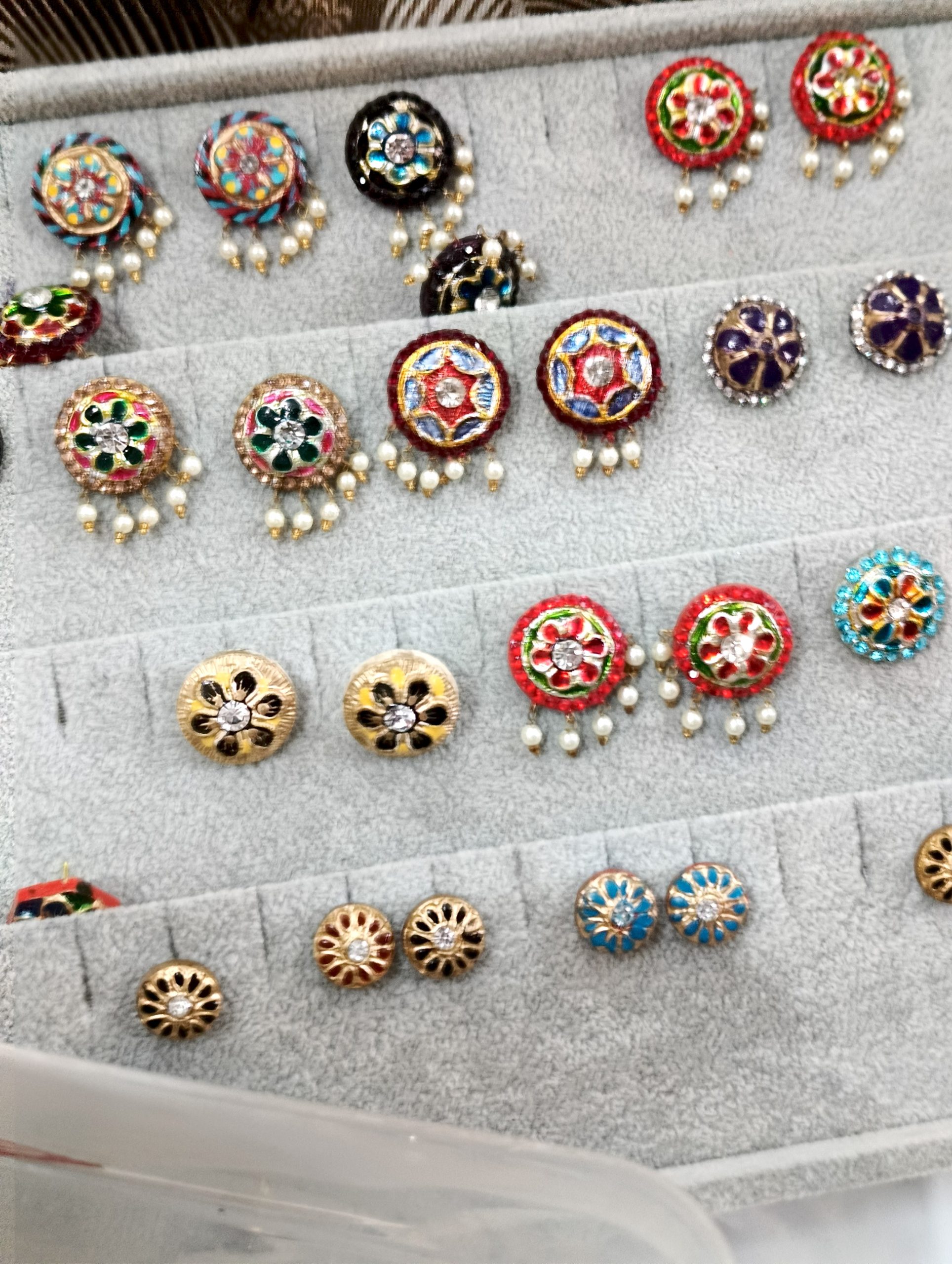
With pride, they showed me not just their creations, but they even made me a necklace, a ring, a bangle, and a brooch to match the color of my outfit I had worn on that day. They shared with me an album of recognition they had received from people across the world.
Meanwhile, their daughter returned from school and, without a word, curled up on a mattress nearby, drifting into sleep, a tender snapshot of their daily life. Watching her, the mother smiled faintly, then leaned closer to me and whispered, ‘Sometimes I wonder… will she continue this craft when she grows up? Times are changing so much, and the younger ones don’t always see value in it the way we do. Her voice carried both pride in her heritage and an unspoken worry about the uncertain future of the tradition.

‘Choodi’, known worldwide as bangles, is one of the oldest forms of jewelry in human civilization. In India, bangles have held cultural significance for thousands of years and continue to do so today. Over time, they have been crafted from a variety of materials, including metal, wood, and even fabric. Among these, India is especially known for bangles made from a unique material called ‘lac’.
‘Lac’ bangles carry deep cultural significance, often worn during festivals and special occasions. The artisans who create them continue to use age-old techniques, blending them with modern designs to keep the tradition alive—sustaining both their culture and their livelihood.
Lac is a natural resin secreted by insects on trees such as peepal, kusum, and dhak. Once extracted, it finds versatile use—not only in jewelry but also in furniture, food products, cosmetics, and even pharmaceuticals. These bangles can be fully customized by the artisans to suit the preferences of the clientele. They can adjust it to the desired size, add colors to match the outfit, and embellish with stones, beads, crystals, or other decorative elements.
Ancient scriptures link lac bangles to the story of Lord Shiva and Goddess Parvati. It is believed that Shiva gifted Parvati ‘lac’ bangles on their wedding, symbolizing their sacred union. Since then, these bangles have become a traditional gift for Hindu brides, signifying blessings and a prosperous married life. The significance of lac is highlighted even in the ancient Hindu texts known as ‘Vedas.
This treasured craft traces its origins to the time of Maharaja Amer, who was captivated by the skill and artistry of the ‘Maniharan community’ from Uttar Pradesh(a state in India), and invited them to Jaipur to practice their craft under royal patronage. Even today, the legacy thrives along the bustling street known as ‘Maniharan ka Raasta’ in Jaipur, where artisans continue to shape, embellish, and refine their work. Walking down this lane, I witnessed the living tradition in motion, the rhythmic sounds of tools, the vibrant colors taking form, and the artisans’ dedication keeping this centuries-old craft dynamic and alive.
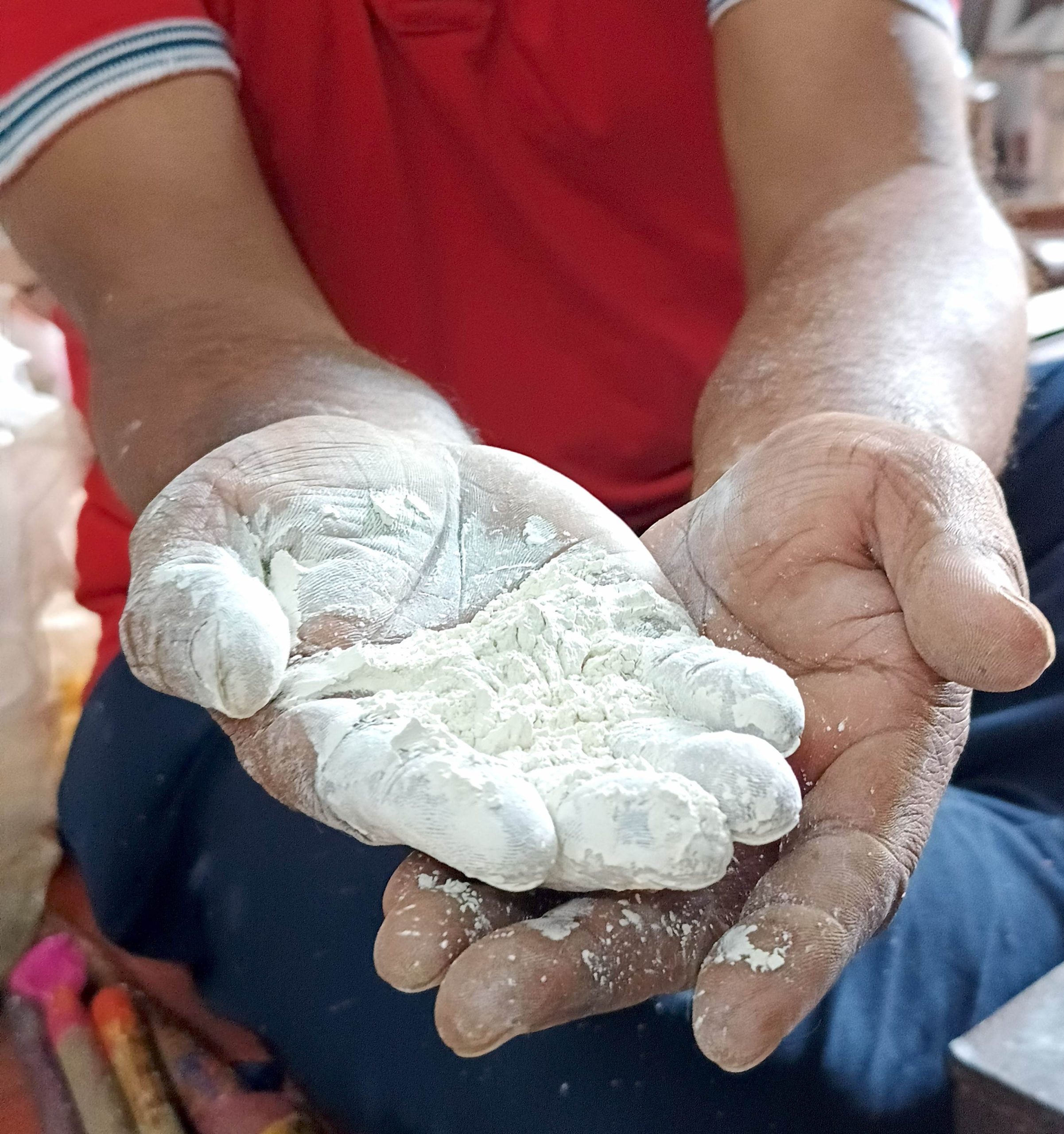
Creating handcrafted products is a laborious, exhausting, yet fascinating process. The making of lac bangles begins with collecting lacquer from trees. A tiny insect, known as kerria lacca, secretes this resinous substance on the branches, typically in red or dark brown. The lacquer is then carefully extracted and goes through several purification steps before it can be used. Artisans often mix in stone powder to make it softer and more malleable for crafting.
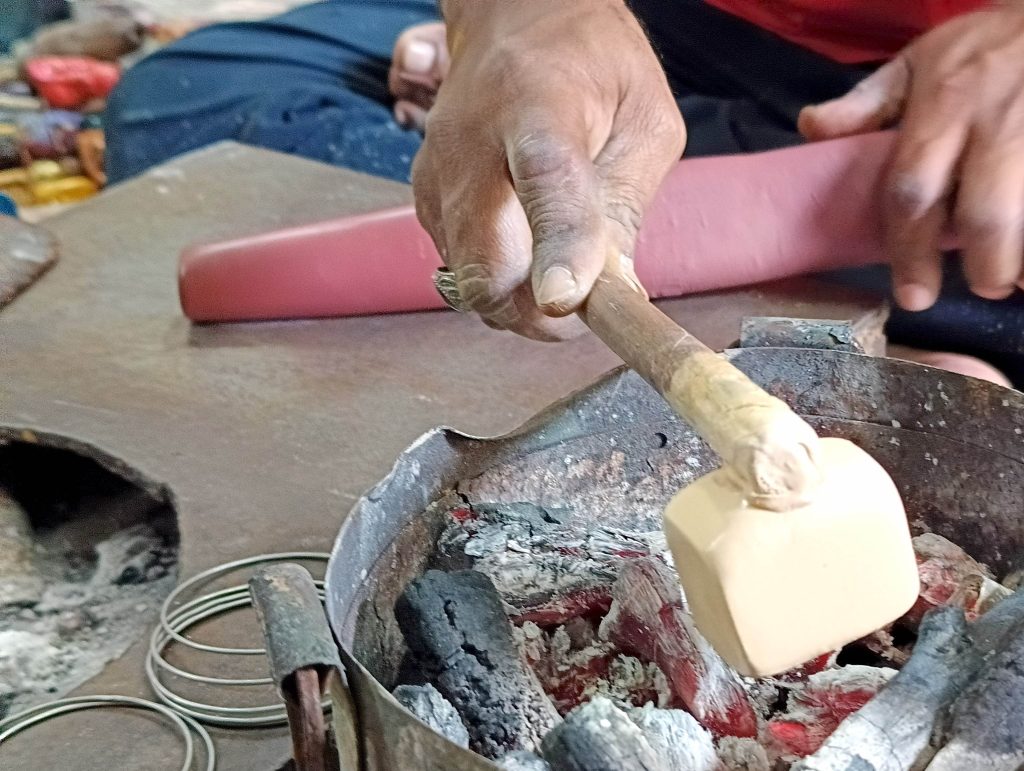
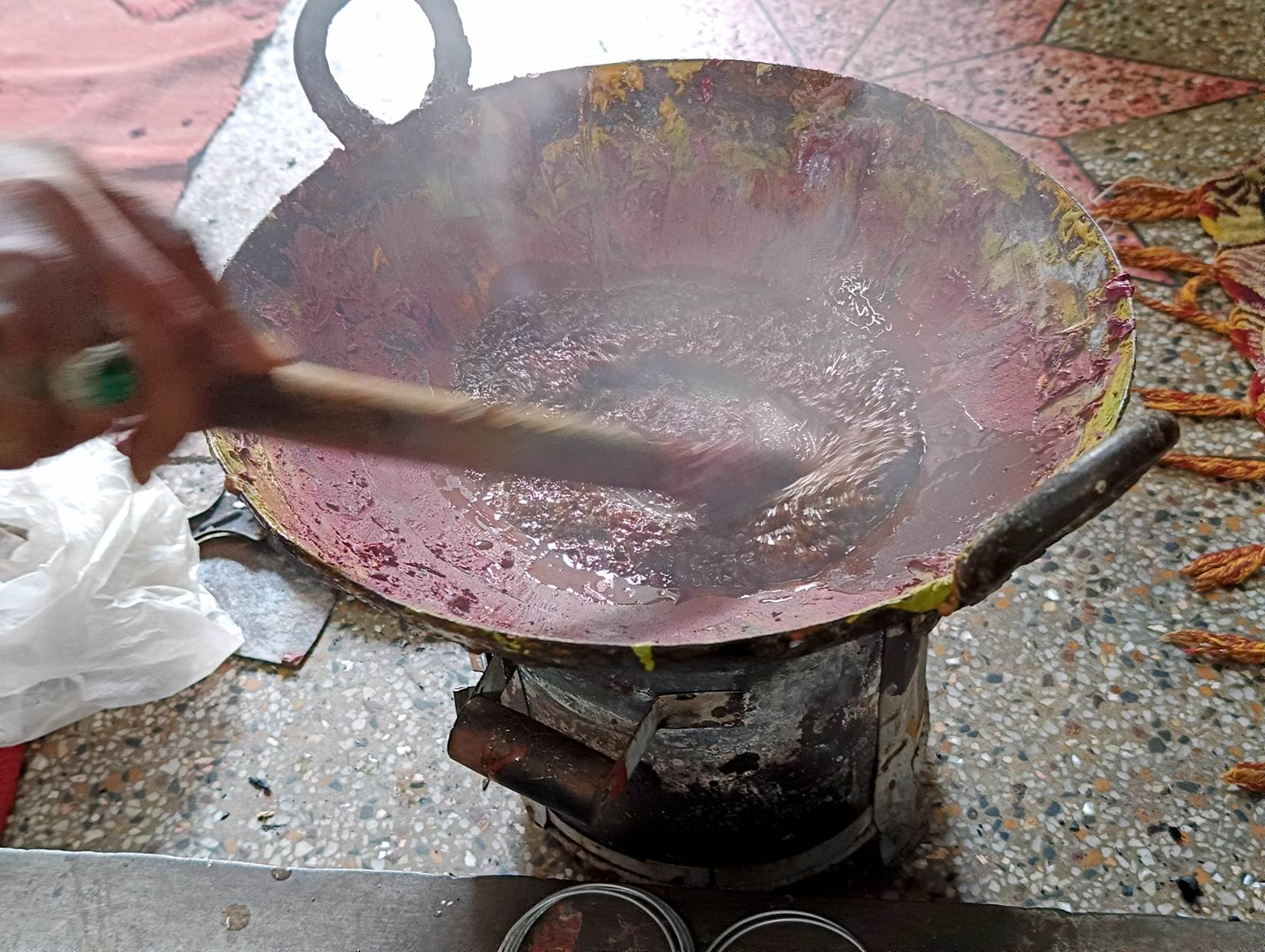
The resin is first melted in a pan along with stone powder. Once it forms a workable mixture, it is removed from the heat and kneaded into a soft dough, which is then rolled and wrapped around a wooden stick called a ‘s-handle.’ This handle is later used to shape the lacquer by reheating it over a burner, allowing it to be molded into various shapes and sizes. While holding the handle, the lacquer is rotated continuously to elongate it, and then shaped precisely using a tool called a ‘hattha.’ Different pigments can be mixed into the lacquer to achieve a range of colors, which are carefully applied to give the bangles their desired hue, tinge, or pattern for various styles.
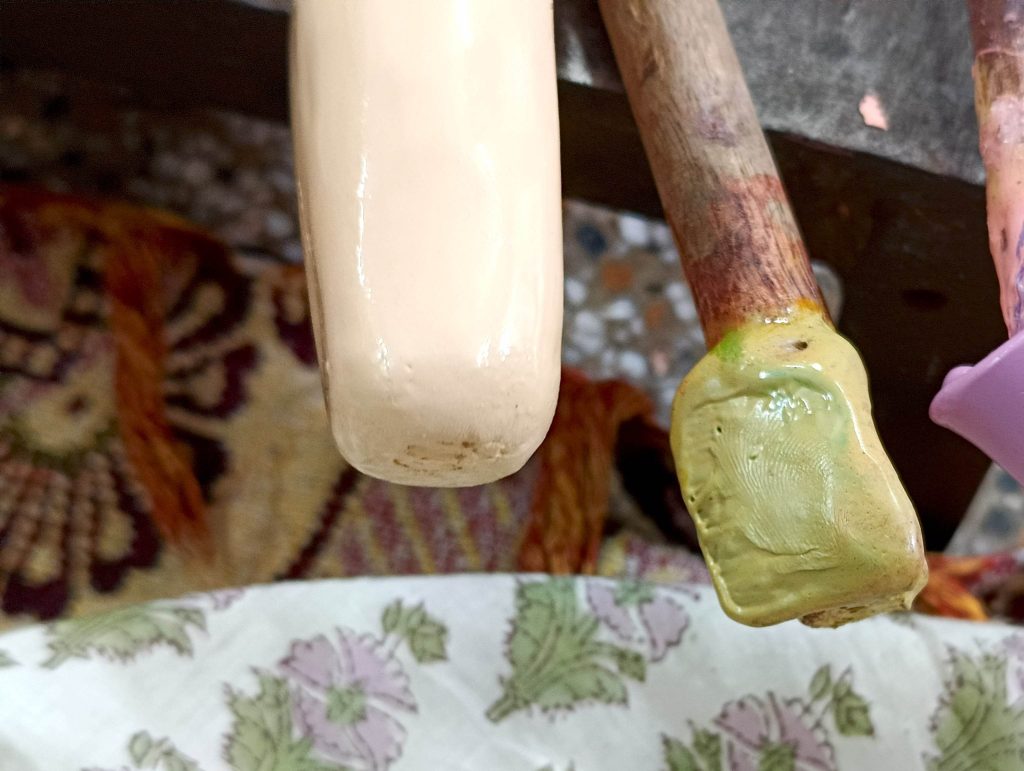
The colored lacquer rolls are first cut into small pieces and shaped into preliminary bangle forms. Using a grooved wooden tool, artisans press into each piece, creating a narrow groove in the lacquer. The bangle loop is then formed and reheated over coal. To achieve the perfect size and shape, the bangle is worked on a wooden lathi and finally polished with a soft cloth to bring out its shine. After these meticulous steps, the vibrant lacquer bangle is complete.

The artisans may further embellish the bangles with colored glass, stones, or crystals, making them ready to be admired and cherished by customers.
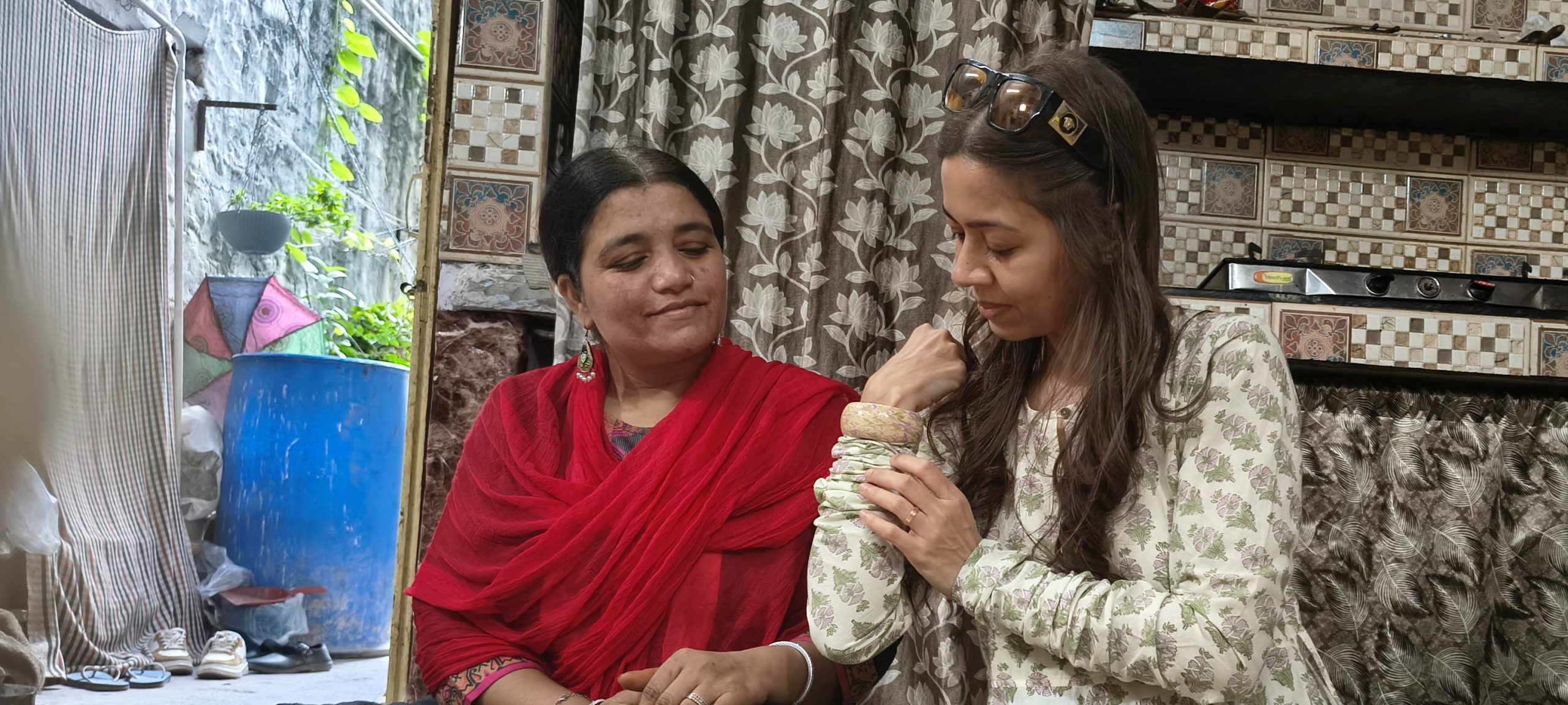
Lac bangles are valued for their natural malleability, making them a sustainable choice. When broken, they can be mildly heated, reshaped, and reused, though this process can only be repeated a certain number of times before the material turns brittle. Beyond their charm, they are also skin-friendly, causing no irritation or infections.
Lac bangles are entirely handcrafted using age-old techniques and do not involve any machinery at any step during the making, except for the burner and moulding tools for heating. Each bangle carries the unique skill, patience, and heritage of the artisans, making it truly exceptional.
Sales of lac bangles see a significant rise during festivals like Teej, Holi, Gangaur, or marriage. The artisans create special designs to complement traditional attire and match the vibrant colors of the celebrations.
But, like many other traditional art forms, artisans fear that this craft is also dying. The preference of people for bangles made from synthetic material is on the rise since they are more durable. Synthetic jewellery has led to decreased interest in handmade ones, and even the younger generation shows little inclination to learn or engage with this heritage. With the convenience of ubiquitous malls, few people think to go to local exhibitions where these artisans display their collection, leaving handcrafted treasures increasingly overlooked. In other cases, people buy and wear these kinds of bangles, but without any awareness of this special craft. Heritage crafts should be valued and preserved, and people are collectively responsible for this.
Deforestation and environmental changes have also made it increasingly difficult for artisans to access the raw materials needed to sustain this craft. While the artisans continue to do their best to keep the tradition alive, it is now up to us to try to keep the tradition alive by learning, educating, or consuming. Heritage crafts should be valued and preserved. We, as people, are collectively responsible for this and ensure its survival by learning about it, educating others, and actively engaging with this living heritage.
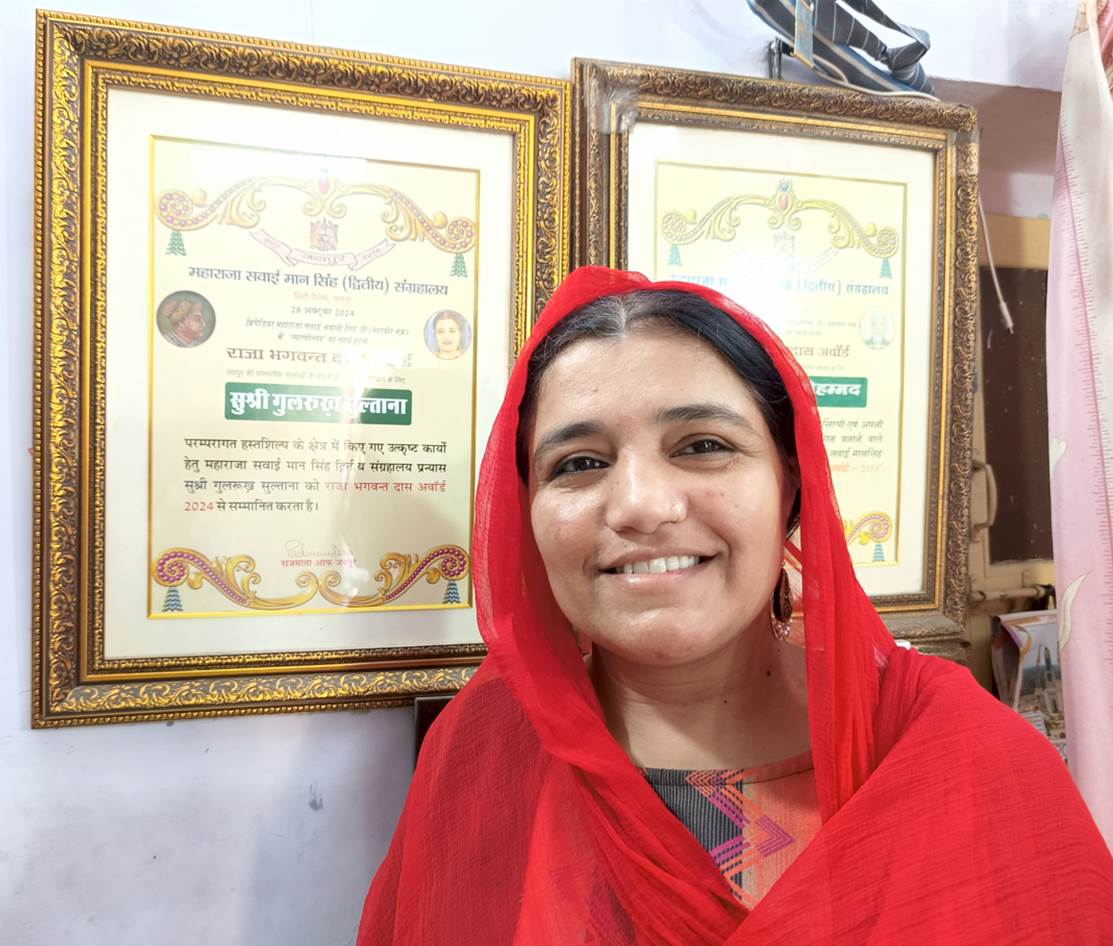
Despite their humble living conditions, they radiated dignity and happiness. Still, I felt deeply that such dedicated artisans deserve greater recognition and financial support for preserving this beautiful tradition. One sentence that stuck with me long after I had left their house was the quote from the lady artisan, “Art never dies!” and it’s true.